Article: Why Warm Light Feels More Luxurious in Residential Interiors
Why Warm Light Feels More Luxurious in Residential Interiors
Have you ever walked into a high-end boutique hotel, a fine dining restaurant, or a sprawling luxury villa and instantly felt a sense of calm and opulence wash over you? You might have credited the plush velvet sofas, the marble countertops, or the expensive artwork. But there is a silent, invisible architect at play that dictates the entire mood of the space: the lighting.
Specifically, it’s the glow of warm light.
When it comes to residential interiors, the debate between warm and cool lighting is often settled the moment you want your home to feel like a high-end sanctuary. Cool light has its place in productivity hubs, but if luxury, comfort, and architectural elegance are your goals, warm light is the undisputed champion.
In this comprehensive guide, we are diving deep into the psychology and design principles behind warm lighting. We will explore why this specific color temperature elevates residential spaces, how you can seamlessly integrate it into your home, and showcase some of the finest luxury fixtures from Ankur Lighting.
Understanding the Kelvin Scale: What Exactly is "Warm" Light?
To understand why warm light feels so luxurious, we first need to get slightly technical and look at the Kelvin (K) scale, which measures color temperature.
Unlike measuring the physical heat a bulb emits, the Kelvin scale measures the visual color characteristic of the light.
-
2700K – 3000K (Warm White): This range emits a soft, yellowish-amber hue. It mimics the glow of a sunset, a crackling fireplace, or a traditional incandescent bulb.
-
3500K – 4500K (Neutral/Cool White): A crisp, clean white light often used in offices or task-oriented spaces like kitchens.
-
5000K – 6500K (Daylight): A stark, bluish-white light that mimics bright midday sun, typically reserved for commercial garages or hospitals.
When interior designers talk about "luxury lighting," they are almost exclusively referring to the 2700K to 3000K range. The transition from harsh, artificial blue tones to soothing, organic yellow tones fundamentally alters the DNA of a room. Modern LED technology has made it easier than ever to achieve this timeless glow without the massive energy consumption of old-school bulbs.
The Psychology: Why Does Warm Light Equal Luxury?
Interior design is as much about human psychology as it is about aesthetics. The way a room makes you feel is heavily dictated by how your brain processes the light in that room. Here is why our brains interpret warm light as an indicator of luxury:
1. It Triggers Biological Relaxation
For thousands of years, human beings have gathered around the warm, orange glow of a fire at the end of the day. Biologically, warm light signals to our circadian rhythm that the day is winding down. It encourages the brain to release melatonin, helping our bodies decompress. Luxury is ultimately about comfort. A space cannot feel luxurious if it makes you feel anxious, alert, or stressed. Warm light acts as a visual deep breath.
2. The "Hospitality" Association
Think about your favorite luxury experiences—a five-star resort lobby, an exclusive lounge, or a premium spa. These spaces universally employ warm lighting at low intensities. Because we subconsciously associate these amber-toned environments with premium hospitality and pampering, bringing that same lighting into a residential space instantly elevates the perceived value of the home.
3. Flattering Skin Tones
There is a reason dressing rooms in high-end boutiques use warm lighting. Cool white light (4000K+) can cast harsh, contrasting shadows that highlight blemishes and make skin look washed out. Warm lighting, on the other hand, acts like a real-life photo filter. It softens shadows and casts a flattering, golden glow over the people in the room, making everyone look and feel their best.
Architectural Enhancements: Transforming Your Home’s Features
Beyond human psychology, warm lighting is a powerful tool for enhancing the physical materials used in luxury residential design.
Highlighting Natural Textures
Luxury homes often feature rich, organic materials like mahogany, walnut, exposed brick, natural stone, and brass. Warm light brings out the deep, rich undertones in natural wood and makes metallic finishes like gold and brushed brass sparkle with elegance. Cool light tends to flatten these textures, making expensive materials look clinical or artificial.
Softening Room Edges
Harsh, bright lights draw your attention to the sharp corners and boundaries of a room. Warm lighting naturally blurs the hard edges of a space, making living rooms and bedrooms feel more expansive, intimate, and fluid.
Creating Depth and Drama
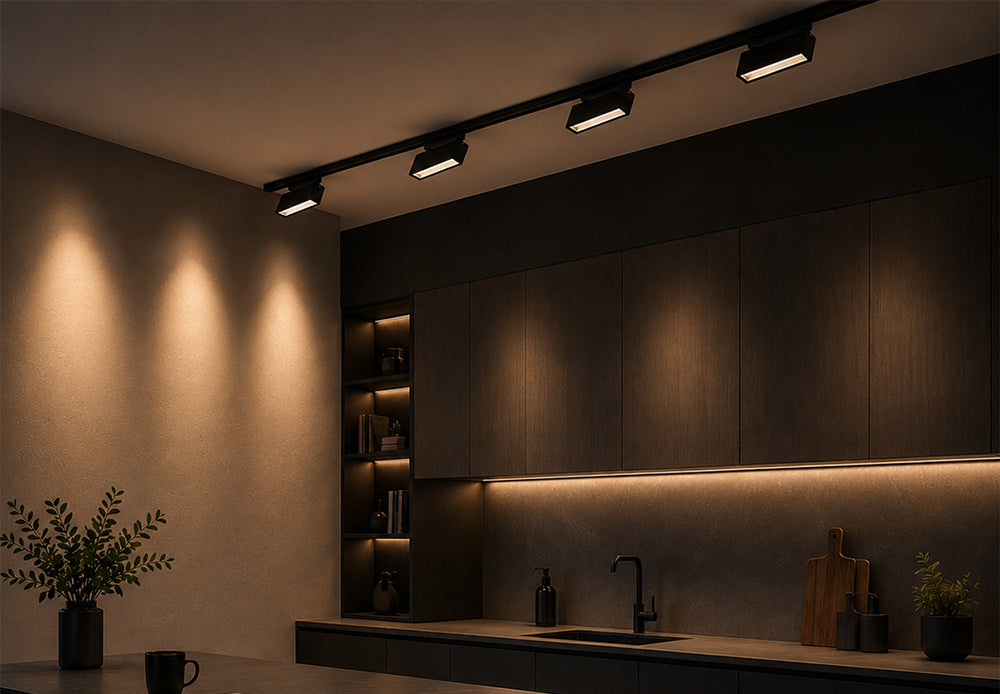
In high-end interior design, flat lighting is the ultimate sin. Warm light allows for the creation of "pools of light" across a room. By washing a textured wall with a 3000K glow or placing a warm spotlight over a coffee table, you create contrast and drama. This interplay of soft light and shadow is a hallmark of expensive, custom-designed spaces.
A Room-by-Room Guide to Luxurious Warm Lighting
Implementing luxury lighting isn't about slapping the same bulb into every fixture. It requires a tailored approach depending on the function of the space.
The Living Room
The living room is your home's central sanctuary. It should feel inviting for guests and relaxing for family movie nights. Layer warm ambient ceiling lights with warm accent lighting (like wall sconces or table lamps). Keep temperatures firmly between 2700K and 3000K to ensure the space remains a cozy haven.
The Bedroom
Your bedroom should be the ultimate luxury retreat. Avoid cool lights entirely here. You want a 2700K warm glow for bedside reading lights to ensure your melatonin production isn't disrupted before sleep. Paired with dimmers, this creates a deeply restful, boutique-hotel vibe.
The Dining Room
Fine dining establishments use warm light to make food look more appetizing and to encourage guests to linger and converse. Replicate this in your home by hanging a statement warm-light chandelier or a cluster of pendants over the dining table. The glow will reflect beautifully off glassware and cutlery.
Hallways and Entryways
The entryway dictates the first impression of your home. A warm-toned light washing against the walls of a hallway or a grand warm chandelier in the foyer immediately tells guests they are walking into a premium, sophisticated environment.
Top 5 Luxury Warm Light Fixtures by Ankur Lighting
To help you achieve this high-end aesthetic, we have curated five exceptional products from Ankur Lighting. These fixtures combine cutting-edge LED technology, striking architectural design, and the perfect warm tones needed to luxurious your space.
1. Ankur Unplugged Aurora Wireless Table Lamp
When you want to add a touch of upscale hospitality to a side table, dining console, or outdoor terrace, cordless lighting is the ultimate luxury.
-
Why it feels luxurious: Crafted with electroplated iron and an anti-rust gold finish, this tall, sleek lamp features a touch sensor and offers customizable lighting modes. You can easily switch it to its warm setting to create an intimate, restaurant-like atmosphere without the clutter of messy wires.
-
Explore the fixture: Ankur Unplugged Aurora Wireless Table Lamp
2. Ankur Lana Recessed Adjustable LED Downlight
True luxury doesn't always shout; sometimes, it’s completely invisible. For architectural ambient lighting, the Ankur Lana is a masterclass in subtlety.
-
Why it feels luxurious: This mini-recessed light sits flush against your ceiling. The brilliant adjustable (tiltable) feature allows you to wash a textured wall or highlight a piece of art with a cozy 3000K warm glow. It removes visual clutter from the ceiling while delivering high-end, gallery-style illumination.
-
Explore the fixture: Ankur Lana Recessed Adjustable LED Downlight
3. Ankur Curlus LED Bedside Reading Wall Light
The hallmark of a luxury hotel suite is dedicated, stylish bedside lighting. The Curlus Wall Light brings that exact five-star experience into your master bedroom.
-
Why it feels luxurious: Featuring a wave-inspired, sophisticated aluminium design, this fixture is available in Antique Brass and Gun Metal finishes. Most importantly, it emits a deeply relaxing 2700K warm LED glow, allowing you to read in bed without straining your eyes or disrupting your sleep cycle.
-
Explore the fixture: Ankur Curlus LED Bedside Reading Wall Light
4. Ankur Linden 3CCT LED Round Surface Ceiling Light
Sometimes residential spaces need to be versatile. The Linden offers the best of both worlds by providing high-quality ambient lighting that you can control.
-
Why it feels luxurious: With its refined brushed grey finish and seamless flush mount design, it looks impeccably modern. It features a 3CCT tunable system, meaning you can switch to a luxurious warm white for cozy evenings, or shift to a cooler white during the day if the room needs to double as a workspace.
-
Explore the fixture: Ankur Linden 3CCT LED Ceiling Light
5. Ankur Egg Metal Pendant Light
A dining room or kitchen island instantly feels more bespoke and expensive when anchored by statement pendant lights.
-
Why it feels luxurious: The Egg Pendant features a minimalist matte exterior (in black or white) beautifully juxtaposed with a beaten brass/rust-gold interior. When lit, the light reflects off the warm metallic interior, casting a rich, golden, ambient glow over your dining space that will leave your guests in awe.
-
Explore the fixture: Ankur Egg Metal Pendant Light
How to Layer Warm Lighting for a Five-Star Experience
To truly maximize the luxurious feel of warm lighting, you must follow the golden rule of interior design: Layering. A single warm bulb in the center of the ceiling will leave the room looking flat. You need three distinct layers:
-
Ambient Lighting (The Foundation): This provides the overall illumination. Use warm recessed lights (like the Ankur Lana) or a large central fixture (like the Linden Ceiling Light). Dimmer switches are non-negotiable here; controlling the intensity is key to luxury.
-
Task Lighting (The Function): This is lighting with a specific purpose. Bedside reading sconces (like the Ankur Curlus) or warm pendants dropped low over a kitchen island (like the Egg Pendant).
-
Accent Lighting (The Drama): This layer adds depth by highlighting architectural features. Think of picture lights illuminating a painting, or a cordless table lamp (like the Aurora) tucked into a dark corner to draw the eye.
When all three layers operate in harmony within the 2700K–3000K spectrum, your residential interior transforms from a simple house into an experiential, high-end living space.
Conclusion
Lighting is the silent language of interior design. While furniture, flooring, and paint colors dictate the style of a room, it is the lighting that dictates the soul. By embracing the soft, golden, and relaxing properties of warm LED light, you can dramatically elevate the aesthetics of your home. It makes natural textures pop, flatters skin tones, and signals to your brain that it is time to unwind in pure comfort.
If you are ready to upgrade your residential interiors, explore the stunning, high-efficiency collections at Ankur Lighting and bring the five-star experience directly to your doorstep.
Frequently Asked Questions (FAQs)
1. Can I mix warm and cool light in the same room?
While you generally want to avoid mixing different color temperatures in the same fixture, you can mix them by layer. For example, in a kitchen, you might use 4000K cool white recessed lights for chopping and cleaning (task lighting), but hang 3000K warm pendant lights over the island for dining and socializing (ambient/accent lighting).
2. Does warm LED light save as much energy as cool LED light?
Yes! The color temperature of an LED light does not dictate its energy efficiency. A 3000K warm LED bulb will consume the exact same ultra-low amount of electricity as a 6000K daylight LED bulb of the same wattage. You get the vintage, luxurious glow of old incandescent bulbs without the heavy energy bill.
3. Is warm light bad for reading or working?
Not necessarily, but it depends on the context. For long hours of intense studying or remote computer work, cool light (4000K) is better as it reduces eye strain and keeps you alert. However, if you are reading a novel in bed to wind down, a warm light (2700K) is highly recommended as it won't suppress your natural melatonin production.
4. What is a 3CCT tunable light fixture?
3CCT stands for 3 Correlated Color Temperatures. Fixtures with this technology (like the Ankur Linden) allow you to change the color of the light from Warm White (3000K) to Neutral White (4000K) to Daylight (6500K) with a simple switch. It is the perfect solution for multi-purpose rooms.
5. How do wall colors affect warm lighting?
Light reflects off surfaces, meaning your paint matters! Warm lighting will beautifully enhance warm-toned walls (reds, oranges, warm whites, earthy browns). However, if you have very cool-toned walls (stark blues or icy grays), warm light can sometimes clash and make the paint look slightly muddy. Always test a bulb against your paint before committing!
Read more
Soft Shadows, Strong Interiors: Why Shadow Matters in Lighting Design
When we think about designing the perfect interior space, our minds naturally gravitate toward the tangible elements: plush velvet sofas, striking wall colors, rich wooden flooring, and carefully c...
Read more