How to Plan Lighting for Staircases and Corridors: The Ultimate Guide
When designing a home or commercial space, we pour countless hours into perfecting the living room, the kitchen, and the master bedroom. But what about the spaces that connect them? Staircases, corridors, and hallways are the arteries of any building, yet they are notoriously overlooked when it comes to lighting design. Often relegated to a single, harsh overhead bulb or left in the shadows, these transitional areas hold massive potential. Proper illumination in stairwells and corridors is not just a matter of aesthetics; it is a critical safety requirement.
In this comprehensive guide, we will walk you through exactly how to plan lighting for staircases and corridors. Whether you are dealing with a grand, double-height foyer, a narrow hallway, or outdoor steps, the right lighting strategy can transform these functional passageways into breathtaking architectural features. We will explore the art of layering light, how to banish the dreaded "tunnel effect," and highlight some of the most innovative LED solutions from Ankur Lighting to bring your vision to life. Let’s dive in.

1. The Core Principles of Transitional Lighting: Layering is Everything
Before we look at specific fixtures, it is essential to understand the philosophy behind lighting staircases and corridors. The biggest mistake homeowners and designers make is relying on a single, ultra-bright ceiling light [1.3.3]. This creates harsh glare, unappealing shadows, and an environment that feels more like a sterile commercial office than a welcoming home.
Instead, professional lighting design relies on a three-tiered layering approach:
-
Ambient Lighting: This is your foundational layer. It provides the general illumination necessary to navigate the space safely. In stairwells and corridors, ambient light usually comes from ceiling-mounted fixtures, downlights, or large central chandeliers.
-
Task Lighting: This layer is highly focused and designed for a specific purpose—in this case, seeing where you are placing your feet. Recessed step lights are the quintessential task lighting for stairs, casting a downward pool of light directly onto the treads to prevent trips and falls.
-
Accent Lighting: This is where the magic happens. Accent lighting is used to create visual interest, highlight architectural features (like textured walls or art), and establish mood. Wall sconces and linear LED profiles serve as excellent accent lights in transitional spaces.
When planning your layout, the goal is to weave these three layers together. A well-lit corridor should guide you forward naturally, while a properly lit staircase should offer a safe, glare-free ascent with a touch of elegance.
2. How to Plan Lighting for Staircases
Staircases present a unique spatial challenge because they involve vertical movement. You are dealing with multiple viewing angles—from the bottom looking up, and from the top looking down. If fixtures are placed incorrectly, they can shine directly into your eyes, creating a blinding glare that is more dangerous than darkness itself.
Mastering the Step Light
Recessed step lights are the undisputed champions of staircase safety and modern aesthetics. By keeping the light source low to the ground, you eliminate eye-level glare entirely. When placing step lights, you do not necessarily need a fixture on every single tread. A common and visually appealing practice is to place one recessed step light every second or third step, or to stagger them in a zigzag pattern on alternating sides of the wall.
-
Product Spotlight: For a crisp, contemporary look, the Ankur Vertex Vertical Shape Step Light is an incredible choice. This fixture features a bold, upright design with a warm 3000K COB LED. It provides a highly focused 3W glow that defines the edges of your stairs without overwhelming the space. Its sleek vertical profile integrates seamlessly into modern architecture, making it a functional yet stylish safety feature.
Elevating the Space with Wall Sconces
While step lights handle the task lighting at the floor level, you still need to address the empty vertical space on the walls. Wall sconces break up the monotony of a tall stairwell and cast a beautiful, diffused glow that makes the transition between floors feel warm and inviting.
-
Product Spotlight: The Ankur Ashley Round Wall Sconce Glass Wall Light is a masterclass in contemporary elegance. Crafted from premium aluminum, this sleek 9W modern light fixture adds a rhythmic, gallery-like feel to your staircase. Its slim profile ensures it doesn't protrude too far into the stairwell, making it safe and stylish even for narrower flights of stairs.
Anchoring Double-Height Staircases with a Statement Piece
If you are blessed with a staircase that turns around a central landing or features a double-height ceiling, you have the perfect canvas for a statement pendant or chandelier. This serves to fill the vertical void and establishes a breathtaking focal point that guests will admire the moment they enter your home.
-
Product Spotlight: To truly make jaws drop, look no further than the Ankur Geom Infinity Loop Modern LED Pendant Chandelier. Available in luxurious Gold and Rose Gold finishes, its continuous loop design creates an impression of endless movement. When hung in the center of a winding staircase, this chandelier provides brilliant ambient lighting while acting as a modern sculptural masterpiece.

3. How to Plan Lighting for Corridors and Hallways
Hallways are notorious for feeling dark, cramped, and uninviting. Without proper lighting, a long hallway can easily suffer from the "tunnel effect," where the space feels narrower and longer than it actually is. The key to lighting a corridor is to create width, break up the linear length, and introduce visual interest.
Washing and Grazing the Walls
To counteract the tunnel effect, direct your light toward the walls rather than pointing everything straight down at the floor. Wall-washing with recessed ceiling fixtures or wall sconces pushes the boundaries of the space outward, making the corridor feel wider and more expansive. If your hallway features textured surfaces like brick, stone, or wood paneling, position your lights close to the wall to "graze" the texture, creating beautiful shadows and depth.
Breaking the Monotony with Linear Lighting
Instead of spacing out standard downlights in a predictable, boring row, modern interior designers are increasingly turning to linear lighting to add a contemporary edge to corridors. Linear lights can be mounted on the ceiling or the walls to guide the eye and create a sense of forward momentum.
-
Product Spotlight: For an ultra-modern aesthetic, the Ankur Ellis Linear Contemporary LED Wall Light is highly space-efficient and visually striking. Available in sizes up to 1000MM and finishes like Antique Brass and Black, these surface-mounted pipelines offer dynamic accent lighting. They act as integral architectural elements, projecting clean lines of light that serve as both functional illumination and contemporary wall art down a long corridor.
Highlighting Artwork and Family Photos
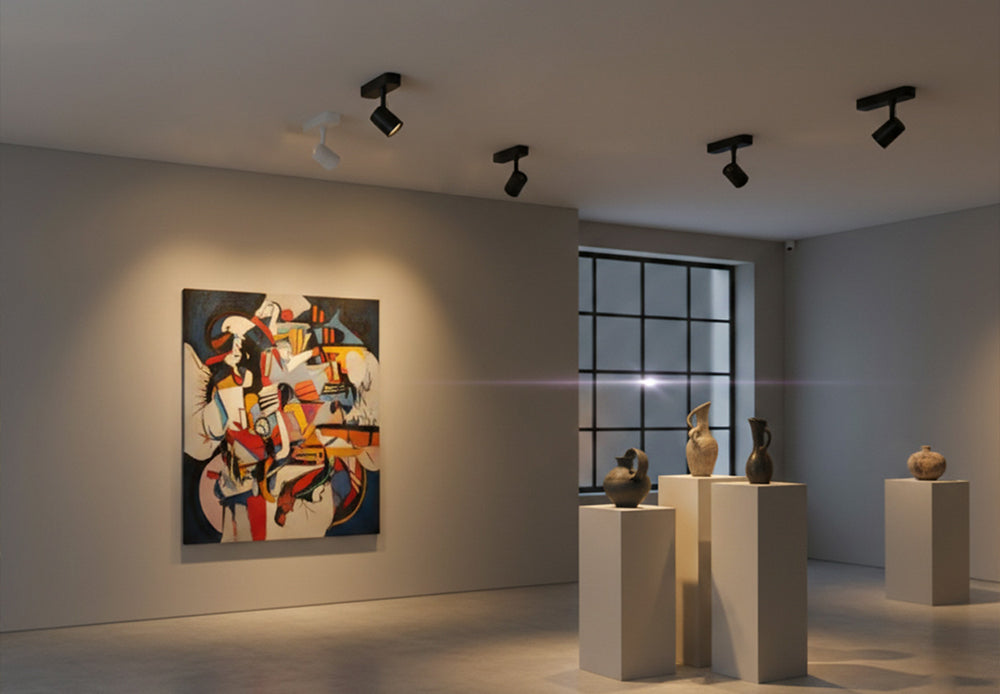
Corridors serve as excellent impromptu art galleries. If you have paintings, mirrors, or family photographs lining your hallway, use directional spotlights or picture lights to highlight them. This not only adds a layer of accent lighting but also gives the eye resting points as you walk down the hall, effectively breaking up the length of the corridor.

4. Don't Forget the Outdoors: Exterior Steps and Passageways
First impressions start long before anyone walks through your front door. If your home or commercial property has exterior stairs leading to the porch, driveway, or garden corridors, outdoor lighting is an absolute must. Nighttime safety is paramount outside, where uneven surfaces, weather conditions, and lack of ambient light can create severe tripping hazards.
When dealing with exterior staircase and corridor lighting, durability is just as important as design. You need fixtures with an appropriate IP (Ingress Protection) rating to ensure they can withstand dust, rain, and environmental wear.
-
Product Spotlight: The Ankur Slant Outdoor LED Wall Light is engineered specifically to withstand the elements while maintaining a high-end architectural finish. Designed with a sleek, dark grey rectangular body, this fixture features a robust IP54 rating, ensuring it is protected against the outdoors. Its powerful 3000K LED technology casts brilliant, downward illumination, ensuring that wet or icy outdoor steps and garden pathways remain safe to traverse.
5. Pro-Tips for Perfecting Your Lighting Layout
Selecting the right fixtures is only half the battle; the technical specifications of your LED lights will make or break the final ambiance of your staircases and corridors. Keep these expert design tips in mind:
-
Get the Color Temperature Right: Color temperature is measured in Kelvin (K). For residential staircases and hallways, you generally want to stick to a warm and welcoming glow. A color temperature of 2700K to 3000K is ideal. It feels cozy and relaxing, matching the vibe of your bedrooms and living rooms. Avoid harsh, cool white lights (4000K and above) in residential corridors, as they can feel clinical and stark.
-
Prioritize the Color Rendering Index (CRI): If you are using your corridor as an art gallery or if you have richly colored architectural features, pay attention to the CRI of your LED lights. A high CRI ensures that the colors of your walls, art, and flooring look vibrant, accurate, and true to life.
-
Utilize Motion Sensors: Corridors and stairwells are transitional spaces; you do not spend extended periods in them, but you use them frequently. Connecting your step lights and corridor lights to motion sensors is a brilliant way to save energy. It also ensures you never have to fumble for a light switch in the dark.
-
Embrace Dimmability: Whenever possible, install your ambient and accent lights on dimmer switches. Having the ability to lower the light levels in the evening prepares your circadian rhythm for sleep and provides a soft, safe nightlight mode for the house.

Conclusion
Staircases and corridors are much more than just functional thoroughfares; they are the connective tissue of your home's interior design. By abandoning the single-overhead-bulb approach and embracing a layered lighting strategy, you can turn these overlooked spaces into stunning architectural showcases. Whether you are installing sleek step lights for safety, adding elegant wall sconces for warmth, or dropping a jaw-dropping geometric chandelier into a double-height void, the right fixtures make all the difference.
By integrating premium, thoughtfully designed LED solutions like those from Ankur Lighting, you guarantee that every step you take in your home is illuminated with safety, efficiency, and uncompromising luxury.
Frequently Asked Questions (FAQs)
1. How many step lights do I need for a staircase?
You do not need a step light on every single step. A common and aesthetically pleasing guideline is to install one recessed step light every two to three steps. Alternatively, you can alternate them on opposite sides of the wall in a staggered, zigzag pattern to ensure even light distribution without cluttering the wall space.
2. What is the best color temperature for hallway and staircase lighting?
For residential homes, a warm white color temperature between 2700K and 3000K is highly recommended. This range creates a cozy, inviting atmosphere that seamlessly blends with the lighting in adjacent living rooms and bedrooms. Cooler temperatures (4000K+) are generally reserved for technical workspaces or commercial offices.
3. How can I make a narrow corridor look wider with lighting?
To banish the "tunnel effect" in a narrow corridor, avoid pointing lights directly down at the floor. Instead, use wall sconces, linear wall lights, or recessed ceiling lights positioned near the edges to "wash" the walls with light. Illuminating the vertical surfaces pushes the visual boundaries of the space outward, making the hallway feel significantly wider.
4. Are LED step lights expensive to run all night?
No. Modern LED step lights consume very little electricity—often between 1 to 3 watts per fixture (like the 3W Ankur Vertex Step Light). Running a few LED step lights throughout the night as a safety measure will have a negligible impact on your electricity bill. For even more efficiency, you can hook them up to a motion sensor or a timer.
5. Can I use indoor wall lights on my exterior steps?
No, you should never use indoor-rated lighting fixtures outside. Outdoor fixtures require a specific IP (Ingress Protection) rating to ensure they are sealed against dust, moisture, and rain. Always look for dedicated outdoor fixtures—like the Ankur Slant Outdoor LED Wall Light, which features an IP54 rating—for exterior staircases and driveways.
Read more
LED Drivers Explained: Why They Matter for Performance and Lifespan
We live in a brilliant era of modern illumination, where turning on a switch brings instant, glorious light into our homes and workspaces. We often celebrate LED lights as the ultimate miracle bulb...
Read more
The Ultimate Guide to Lighting Control Systems for Hotels: From Guest Rooms to Lobbies
Imagine walking into a luxury hotel after a long, exhausting day of travel. The moment you step through the revolving doors, you aren’t blinded by harsh, clinical lights. Instead, you are greeted b...
Read more