Talk On Call
 Chat On WhatsApp
Article: The Ultimate Guide to Lighting Staircases for Safety and Luxury
The Ultimate Guide to Lighting Staircases for Safety and Luxury
Have you ever tried navigating a dimly lit staircase in the middle of the night? It is a universally unnerving experience. A single misstep can lead to a dangerous fall, making your home’s staircase one of the most critical areas to illuminate properly. But beyond the purely functional necessity of safety, staircases present a massive—and often overlooked—design opportunity. When treated as an architectural focal point rather than just a passageway between floors, a well-lit staircase can elevate the entire aesthetic of your home.
Staircase lighting has evolved dramatically over the last decade. Gone are the days when a single, harsh ceiling bulb was the only option. Today, interior designers and savvy homeowners are using a sophisticated mix of recessed step lights, elegant wall sconces, and statement chandeliers to create breathtaking visual experiences. Whether you are building a new home, renovating a classic property, or simply looking to upgrade your interior lighting game, this guide will walk you through everything you need to know.
We will cover the intersection of safety and luxury, the art of layering light, and some of the best industry-leading products from Ankur Lighting to help you bring your vision to life. Let’s dive in!

Why Staircase Lighting is the Secret Sauce to a Beautiful Home
When designing a home, people pour endless energy into the kitchen, the living room, and the master suite. The staircase, however, is the spine of the house. It connects your living spaces, and in many open-concept modern homes, it is fully visible from the entryway or the main living area.
The Balance of Form and Function
The primary goal of staircase lighting is, undoubtedly, safety. A staircase must have enough illumination to allow people of all ages to clearly see the tread (the horizontal part of the stair) and the riser (the vertical part). Proper lighting prevents shadows from obscuring the edges of the steps, significantly reducing the risk of tripping.
But from a design perspective, lighting is the "secret sauce" that adds a layer of luxury. Thoughtful lighting highlights the texture of your walls, the grain of your wooden stairs, or the sleekness of glass balustrades. It adds depth, drama, and warmth. By blending task lighting (for safety) with ambient and accent lighting (for luxury), you create a multi-dimensional look that feels akin to a high-end boutique hotel right inside your own home.
Layering Your Staircase Lighting: The 3 Main Types
To achieve that perfect mix of safety and luxury, you need to understand the concept of "layering" light. Professional lighting designers never rely on a single light source. Instead, they use three distinct layers:
-
Ambient Lighting: This is your base layer of light. It provides overall illumination for the space so you can see where you are going. In a stairwell, this is often provided by ceiling lights, large pendants, or natural light from windows.
-
Task Lighting: This is highly focused lighting designed to help you perform a specific task—in this case, safely walking up or down the stairs. Step lights recessed into the wall or the stairs themselves are the quintessential task lights for staircases.
-
Accent Lighting: This is the jewelry of your home’s lighting plan. Accent lighting draws the eye to architectural features, artwork, or the staircase itself. Wall sconces or LED strip lights tucked under the stair treads fall into this category.
By combining these three layers, you create an environment that is both highly functional and visually stunning.

Top Staircase Lighting Ideas (Featuring Ankur Lighting Products)
To help you turn these design concepts into reality, we have curated a selection of premium lighting fixtures from Ankur Lighting. Known for their blend of craftsmanship, modern aesthetics, and energy efficiency, these products will help you achieve the perfect staircase setup.
1. Sleek Recessed Step Lights for a Modern Vibe
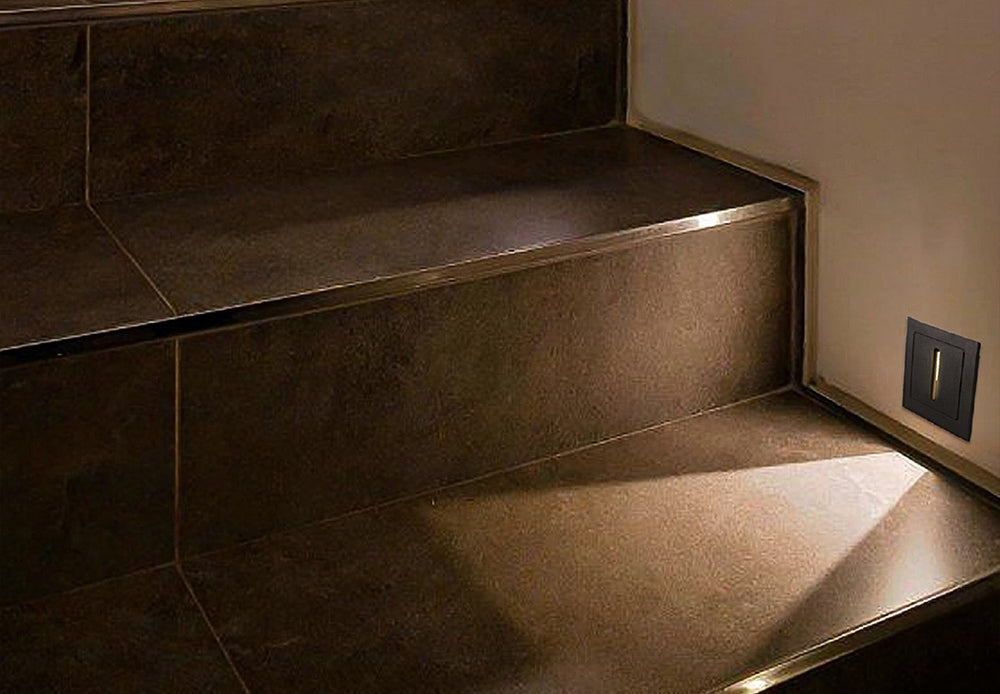
Recessed step lights are the undisputed champions of staircase safety. Installed low on the wall alongside the steps, or directly into the stair risers, they cast a gentle, downward pool of light exactly where you need it—on your feet.
For a crisp, architectural look, the Ankur Vertex Vertical Shape Step Light is an incredible choice. This fixture features a bold, upright design with a clean white finish and a warm 3000K COB LED. It provides a highly focused 3W glow that defines the edges of your stairs without overwhelming the space. Because it boasts an IP65 waterproof rating, the Vertex is incredibly versatile—you can use it for your grand indoor staircase or take it outside to illuminate your deck and patio steps.
If you prefer a more subtle, geometric aesthetic, consider the Ankur Modern Step Light 3W Recessed Indoor Staircase Black Light. This sleek, low-profile square fixture blends seamlessly into contemporary homes and offices. What makes this product a standout is its customizable ambiance; it offers three adjustable color temperatures (warm 3000K, neutral 4000K, and cool 6500K), allowing you to perfectly match the vibe of your existing interior lighting.
2. Statement Wall Sconces for Classic Elegance
While step lights handle the task lighting at floor level, wall sconces elevate the ambient and accent lighting at eye level. Wall sconces break up the empty vertical space of a tall stairwell and cast a beautiful, diffused glow that makes the transition between floors feel warm and inviting.
The Ankur Ashley Round Wall Sconce Glass Wall Light is a masterclass in contemporary elegance. Crafted from premium aluminum with a stunning rust finish, this fixture features a slim, vertical profile that makes a stylish statement without protruding too far into the stairwell space (a crucial factor for narrower stairs). Its integrated 9W LED SMD module provides a powerful yet energy-efficient glow. Installing a pair of these sconces as you ascend the stairs adds a rhythmic, gallery-like feel to your home.
3. The Show-Stopping Chandelier for Double-Height Spaces
If you are blessed with a staircase that features a double-height ceiling or turns around a central landing, you have the perfect canvas for a statement chandelier. A chandelier serves as the ultimate anchor for a stairwell, filling the vertical void with artful illumination and establishing a breathtaking focal point.
To truly make jaws drop, the Ankur Geom Infinity Loop Modern LED Pendant Chandelier is the ultimate centerpiece. Part of Ankur’s avant-garde GEOM family, this fixture is an intersection of art and light. Available in luxurious Gold and Rose Gold finishes, its continuous loop design creates an impression of endless movement. When hung in the center of a winding staircase, this chandelier provides brilliant LED ambient lighting while acting as a modern sculptural masterpiece that your guests will not stop talking about.
4. Don't Forget the Outdoors: Exterior Staircase Lighting
First impressions start before anyone even walks through your front door. If your home has exterior steps leading to the porch, driveway, or garden passages, outdoor staircase lighting is an absolute must for both curb appeal and nighttime safety.
For exterior applications, durability is just as important as design. The Ankur Slant Outdoor LED Wall Light is engineered specifically to withstand the elements. Designed with a sleek, dark grey rectangular body, this fixture features an IP54 rating, meaning it is protected against dust and water splashes. The Slant’s powerful 3000K LED technology casts a brilliant downward illumination, ensuring that wet or icy outdoor steps remain safe to traverse while giving your home's exterior a high-end, architectural finish.

Best Practices and Pro Tips for Stairwell Lighting
Selecting the right fixtures is only half the battle. How you plan, place, and install your staircase lighting determines the final outcome. Here are some industry-standard best practices to ensure your project is a resounding success:
1. Mind the Color Temperature
Lighting color temperature is measured in Kelvins (K). For indoor residential staircases, you want a warm, inviting glow that complements the rest of your home. Experts at Ankur Lighting recommend sticking to a color temperature between 2400K (dimmed incandescent) and 3000K (warm white) for interior spaces. Anything higher than 4000K indoors can feel overly clinical or sterile, though cooler temperatures may work for ultra-modern commercial spaces or outdoor pathways. Always ensure your staircase lighting matches the color temperature of the adjoining hallways.
2. Avoid the "Runway" Look
When installing recessed step lights, it is tempting to place one light on every single step in a perfectly straight line. However, this can end up making your beautiful staircase look like an airport runway. Instead, try staggering the lights. Place a light on every second or third step, or alternate them in a zigzag pattern on opposite sides of the wall. This creates a more organic, visually interesting wash of light.
3. Sizing Your Staircase Chandelier
Hanging a chandelier in a stairwell requires precise sizing and placement. As a general rule of thumb, use the second floor as your visual reference point. Hang the chandelier slightly lower than or exactly at the top of the stairs, so that when you are standing on the second-floor landing, the top of the chandelier is roughly at eye level. If you have a large window in the stairwell, ensure the chandelier is centered within the window frame so it looks perfectly symmetrical from the outside of the house.
4. Automate Your Experience
Why fumble for light switches in the dark? Staircases are prime real estate for smart home automation. Pair your step lights and wall sconces with motion sensors or smart home timers. This ensures the stairs automatically illuminate with a soft glow the moment you approach them at night, providing ultimate convenience and cutting down on wasted electricity.
5. Control the Glare
Because you view a staircase from multiple angles (looking up from the bottom, and looking down from the top), glare control is vital. Ensure your step lights have louvers, covers, or angled beams (like the Ankur Slant) that direct the light strictly downward onto the tread. You never want an exposed LED bulb shining directly into your eyes as you walk down the stairs.

Final Thoughts
Lighting a staircase is an art form that marries critical safety requirements with limitless design potential. By moving away from a single harsh overhead light and embracing a layered approach—utilizing recessed step lights for safety, sconces for warmth, and chandeliers for drama—you can transform your staircase into one of the most stunning features of your home.
Whether you lean toward the architectural precision of the Vertex Step Light or the breathtaking luxury of the Geom Infinity Loop Chandelier, choosing high-quality, reliable fixtures from brands like Ankur Lighting ensures your home will shine brilliantly for years to come. Take the time to plan your layout, mind your color temperatures, and step confidently into a brighter, more beautiful home.
Frequently Asked Questions (FAQs)
Q1: What is the best color temperature for staircase lighting?
For residential indoor staircases, the best color temperature is usually between 2700K and 3000K. This range produces a warm, inviting glow that mimics traditional incandescent lighting and makes interior spaces feel cozy. For modern, minimalist spaces or outdoor steps, you might stretch up to a neutral 4000K, but avoid very cool lighting (5000K+) as it can feel harsh.
Q2: How high should a chandelier hang in a two-story staircase?
When hanging a chandelier in a stairwell, use the second floor as your primary reference point. The ideal height is slightly lower than or right at the top of the stairs, so the top of the fixture is at eye level when you stand on the upper landing. If the stairwell features a large window, center the chandelier within the window for maximum curb appeal.
Q3: Are step lights better than wall sconces for stairs?
They serve different purposes, and ideally, you should use both! Step lights act as task lighting, illuminating the treads to prevent tripping hazards. Wall sconces provide ambient and accent lighting, illuminating the walls and filling the vertical space with a warm glow. Layering both types creates the best aesthetic and safety outcomes.
Q4: Can I use indoor step lights on my outdoor exterior stairs?
No, you should never use indoor-rated lights outside. Outdoor step lights must be engineered to withstand moisture, dust, and temperature changes. Look for fixtures with an Ingress Protection (IP) rating of at least IP54 or IP65. For example, the Ankur Slant Wall Light (IP54) and the Ankur Vertex Step Light (IP65) are heavily protected and safe for outdoor use.
Q5: How many step lights do I actually need?
You generally do not need a light on every single step. A common best practice is to place one recessed step light every two to three steps, or to alternate sides in a staggered, zigzag pattern. This provides plenty of functional illumination for safety while avoiding a cluttered, "airport runway" appearance.
Read more
Magnetic Track Lighting vs Traditional Track Lighting: Which One Should You Choose?
Lighting is the unsung hero of interior design. It has the power to make a small room feel expansive, highlight your favorite architectural features, and completely transform the mood of a space wi...
Read more