Article: Soft Shadows, Strong Interiors: Why Shadow Matters in Lighting Design
Soft Shadows, Strong Interiors: Why Shadow Matters in Lighting Design
When we think about designing the perfect interior space, our minds naturally gravitate toward the tangible elements: plush velvet sofas, striking wall colors, rich wooden flooring, and carefully curated art. When it comes to lighting, most homeowners and even amateur designers tend to focus purely on brightness. The goal is often simply to “light up the room.”
But here is a well-kept secret in the world of high-end interior architecture: the magic of a beautifully lit space isn't just about the light itself—it is about the shadows.
If you want a home or commercial space that feels truly luxurious, inviting, and emotionally resonant, you need to master the interplay between light and darkness. Welcome to the concept of Soft Shadows, Strong Interiors. In this comprehensive guide, we are going to explore why shadow is the unsung hero of lighting design, how to avoid common lighting mistakes, and how to use premium LED fixtures to sculpt your space.
Plus, we will highlight 5 exceptional products from Ankur Lighting that will help you achieve flawless illumination.

The Art of Darkness: Why Shadow is Crucial in Interior Design
Imagine walking into a supermarket or a hospital corridor. The lighting is intensely bright, uniform, and omnidirectional. There are virtually no shadows. How does the space feel? Sterile. Clinical. Exhausting.
Now, imagine walking into a luxury boutique hotel lobby, a high-end restaurant, or a cozy mid-century modern living room. The light is deliberate. It highlights certain areas while allowing others to gently fall away into darkness. The contrast creates dimension, mystery, and warmth.
The "Swiss Cheese Effect"
One of the most common lighting mistakes people make is installing a symmetrical, rigid grid of recessed ceiling lights. Lighting designers affectionately refer to this as the "Swiss cheese effect". A uniform grid of downlights blasts the entire room with a flat pool of light, eliminating the subtle interplay between light and shadow that gives a room its depth. Furthermore, harsh overhead lighting creates unflattering shadows under people's eyes and makes architectural features look entirely flat.
Shadows are what give a room texture. They reveal the grain in a wooden dining table, emphasize the texture of a stone accent wall, and create intimate zones within a larger open-concept space.

Hard Shadows vs. Soft Shadows: What's the Difference?
Before you can design with shadows, you need to understand the two primary types:
-
Hard Shadows: These are created by a small, intense, direct light source (like a clear glass bulb or a narrow-beam spotlight). Hard shadows have sharp, defined edges. While they are excellent for adding dramatic flair to a specific sculpture or a piece of art, too many hard shadows in a living space can feel aggressive and cause visual fatigue.
-
Soft Shadows: Soft shadows are created by larger, diffused light sources or by bouncing light off a surface (like a wall or ceiling). The edges of the shadow blur smoothly into the light. Soft shadows are flattering, calming, and essential for creating a cozy, strong interior.
The ultimate goal in residential and hospitality lighting is to maximize soft shadows for overall ambiance while using hard shadows sparingly for dramatic accents.
Mastering the Layered Lighting Technique
To control your shadows, you must abandon the idea of a single light source doing all the work. Professional lighting design relies on a layered approach:
1. Ambient Lighting (The Base Layer)
This is the general illumination of a room. Instead of achieving this with a grid of harsh ceiling lights, you want soft, indirect light. Think of wall lights washing a vertical surface or linear diffused lights that spread a gentle glow. The shadows created here should be barely noticeable, providing a soft canvas for the rest of your design.
2. Task Lighting (The Functional Layer)
This lighting is dedicated to specific activities—reading in bed, chopping vegetables in the kitchen, or working at a desk. Task lighting needs to be bright enough to prevent eye strain but should utilize frosted lenses or diffusers to prevent harsh glare and hard shadows on your work surface.
3. Accent Lighting (The Sculptural Layer)
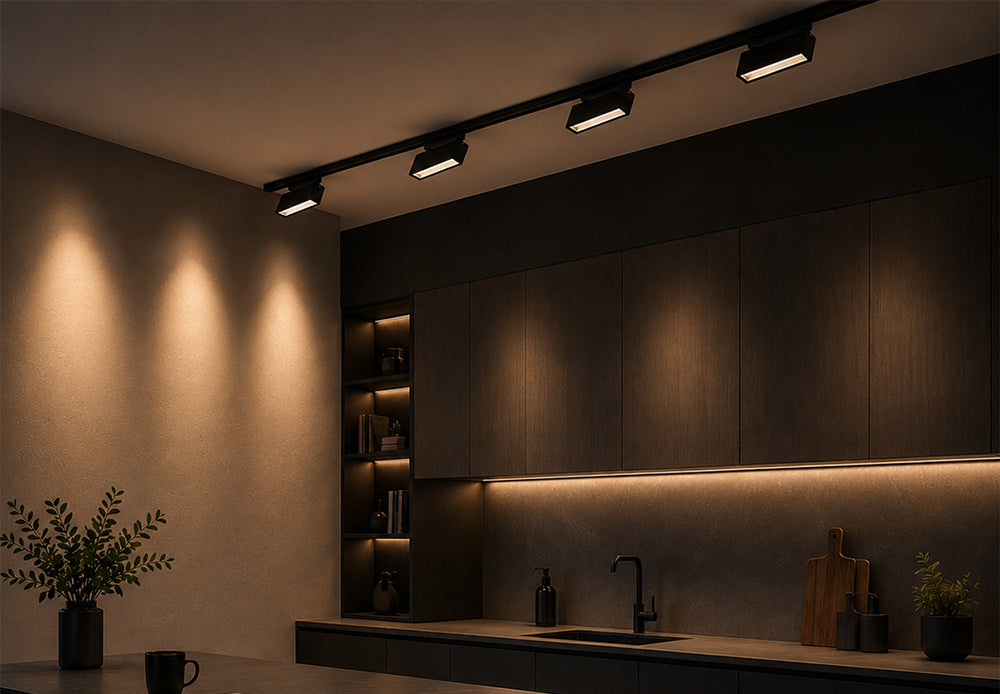
This is where you get to play with shadows deliberately. Using track lights or adjustable downlights, you can highlight architectural features, gallery walls, or indoor plants. By angling the light, you control where the shadow falls, adding instant three-dimensional depth to the room.

Key Techniques to Sculpt Interiors with Light
If you want to achieve the "Soft Shadows, Strong Interiors" aesthetic, keep these professional techniques in mind during your next renovation:
-
Wall Washing: Instead of pointing downlights at the floor, position them close to a wall and angle them slightly. The light "washes" down the wall, turning the wall itself into a large, soft light source that bounces ambient light back into the room.
-
Wall Grazing: Similar to wall washing, but the light is placed extremely close to a textured surface (like brick or stone). The steep angle creates tiny, soft micro-shadows under every bump and ridge, beautifully emphasizing the texture.
-
The Power of Dimming: Every light in your space should be on a dimmer. The ability to lower light output by even 20% instantly softens the shadows in a room and transitions the space from daytime functionality to evening relaxation.
-
Prioritize High CRI (Colour Rendering Index): Quality of light matters. LED lights with a high CRI (90+) ensure that the colors of your furniture and walls look vibrant and natural. Low CRI lights make spaces look sickly and wash out the beautiful shadows you've worked so hard to create.
Elevate Your Space: 5 Must-Have LED Fixtures from Ankur Lighting
To execute professional lighting design, you need professional-grade fixtures. Ankur Lighting has established itself as an industry leader in modern, architectural LED solutions that marry aesthetics with cutting-edge technology.
Here are 5 exceptional fixtures from their collection that are specifically engineered to help you master light and shadow in your interiors.
1. Ankur Lana Recessed Adjustable LED Downlight
As we discussed, the "Swiss cheese" grid of static ceiling lights ruins interiors. The solution is adjustability. The Ankur Lana Recessed Adjustable LED Downlight is a masterclass in modern recessed design. Available in multiple wattages (from 6W to 35W) and body finishes, this fixture allows you to tilt and direct the light beam exactly where you need it.
By pointing the Lana away from the center of the room and toward your walls, you can achieve brilliant wall-washing effects. Bouncing the light off vertical surfaces naturally diffuses the beam, eliminating harsh overhead glare and replacing it with soft, room-expanding shadows.
🔗 Explore the product: Ankur Lana Recessed Adjustable LED Downlight
2. Ankur Mattoni Brushed Brass Modern LED Wall Light
Overhead lighting alone is a recipe for a flat, uninspired room. To truly introduce soft shadows, you need light coming from the middle of the room, roughly at eye level. The Ankur Mattoni Brushed Brass Modern LED Wall Light is the perfect tool for the job.
Merging industrial-inspired design with a luxurious brushed brass finish, the Mattoni functions as a piece of architectural art even when turned off. When illuminated, its integrated SMD LEDs emit a consistent 3000K warm glow. Because wall sconces sit vertically, they wash light up and down the wall, creating a large, diffused glow that makes any living room, hallway, or master bedroom feel instantly cozier and infinitely more inviting.
🔗 Explore the product: Ankur Mattoni Brushed Brass Modern LED Wall Light
3. Ankur 20MM Eco Standard Magnetic Track Spot Light
If you want the ultimate freedom to play with light and shadow, magnetic track lighting is the future of interior design. The Ankur 20MM Eco Standard Magnetic Track Spot Light is a phenomenal entry into this high-end architectural trend.
Unlike traditional tracks that require tools and twisting mechanisms, this magnetic system allows you to effortlessly snap, slide, and reposition the spot light modules anywhere along the low-voltage track. If you move your sofa or want to change which piece of art is highlighted, you can adjust your lighting in seconds. This allows you to fine-tune your accent lighting to create the exact shadow profiles you want, adding intense drama to specific features without overwhelming the rest of the room.
🔗 Explore the product: Ankur 20MM Eco Standard Magnetic Track Spot Light
4. Ankur Panda Frosted Globe Pendant Light
Task lighting often gets a bad reputation for causing harsh, unpleasant shadows, especially over kitchen islands or bedside tables. The key to fixing this is diffusion. The Ankur Panda Frosted Globe Pendant Light utilizes a beautiful spherical design crafted from high-quality acrylic or glass (depending on your preference).
The milky, frosted nature of the globe acts as a 360-degree diffuser. It takes the intense LED light source inside and scatters it evenly in all directions. The result? Completely glare-free, ultra-soft task lighting that eliminates hard shadows on your work surfaces while adding a touch of minimalist grace to your ceiling.
🔗 Explore the product: Ankur Panda Frosted Globe Pendant Light
5. Ankur 30MM Ultrathin Magnetic 12W Linear Diffused Light
Sometimes, the best way to control shadows is to change the physical shape of the light source itself. A small bulb creates a hard shadow; a long, continuous line of light creates incredibly soft, wrapping shadows. The Ankur 30MM Ultrathin Magnetic 12W Linear Diffused Light is designed exactly for this purpose.
Snapping seamlessly into Ankur's magnetic track systems, this linear module provides soft, even, and entirely glare-free illumination. Because the light is spread out over a longer physical area, it is incredibly flattering for both the architecture of the space and the people within it. It is an exceptional choice for modern home offices, long corridors, or sleek kitchen setups where you want maximum visibility with minimal shadow contrast.
🔗 Explore the product: Ankur 30MM Ultrathin Magnetic 12W Linear Diffused Light

Conclusion: Embracing the Shadows
Designing a beautiful interior is as much about what you choose to obscure in darkness as it is about what you choose to illuminate. By moving away from the outdated notion of lighting a room uniformly from above, and instead embracing layered, directional, and diffused lighting, you can transform the aesthetic of your entire home.
Soft shadows bring warmth, depth, and character to our living spaces. With the right techniques and high-quality, architectural-grade fixtures from innovators like Ankur Lighting, sculpting with light and shadow is no longer just for professional designers—it is entirely within your reach.
Frequently Asked Questions (FAQs)
Q1: What is the "Swiss cheese effect" in lighting design?
The "Swiss cheese effect" refers to the outdated practice of placing a symmetrical, highly concentrated grid of recessed downlights across an entire ceiling. This creates a flat, sterile pool of light, eliminates flattering shadows, and leaves the ceiling looking like a piece of Swiss cheese. Using adjustable downlights and wall sconces is a much better approach.
Q2: How do I create softer shadows in my living room?
To create soft shadows, avoid relying solely on harsh, direct overhead lights. Instead, layer your lighting. Use wall sconces to bounce light off the walls, opt for pendant lights with frosted diffusers (like the Ankur Panda Globe), and put your ambient lights on dimmer switches.
Q3: Why is Magnetic Track Lighting becoming so popular?
Magnetic track lighting offers unparalleled flexibility and a sleek, minimalist aesthetic. Because the tracks operate on low voltage and use magnets, you can physically snap, slide, and move the light fixtures (like spotlights or linear diffusers) along the track without any tools or complex wiring. It allows you to adapt your lighting as your interior layout changes.
Q4: What color temperature is best for interior residential spaces?
For residential areas like living rooms, bedrooms, and dining spaces, a warm color temperature between 2700K and 3000K is highly recommended. This warm white mimics the soothing glow of traditional incandescent bulbs and helps create a relaxing atmosphere that complements soft shadows perfectly.
Q5: Are LED lights capable of producing high-quality shadows?
Absolutely. Modern LED technology has advanced significantly. The key is to look for LED fixtures with a high Colour Rendering Index (CRI of 90 or above) and to choose fixtures with appropriate lenses or diffusers. High-quality LEDs, like those used by Ankur Lighting, provide crisp, beautiful illumination that allows for masterful shadow control.
Read more
How High Should Your Lights Hang? The Designer’s Guide to Lighting Proportions
Have you ever walked into a stunning, beautifully furnished room, but something felt undeniably… off? Chances are, the culprit was the lighting. Lighting is often referred to as the jewelry of inte...
Read more