Pendant Lights vs Chandeliers: Which One is Right for Your Space?
When you walk into a beautifully designed room, the lighting is often the unsung hero that dictates the mood, highlights the architecture, and ties the decor together. But when it comes to selecting a focal point for your ceiling, you are inevitably faced with a classic design dilemma: Pendant Lights vs. Chandeliers.
Both are suspended from the ceiling. Both make a statement. Both illuminate your space. Yet, they serve entirely different functional and aesthetic purposes. Making the wrong choice can leave a room feeling unbalanced, overly bright, or visually cluttered.
Whether you are renovating a cozy apartment, designing a grand villa, or upgrading a commercial space, understanding the nuances between these two lighting powerhouses is essential. Let’s break down the definitions, the key differences, and the ideal use cases to help you choose the perfect fixture for your space, featuring some of the finest LED innovations from Ankur Lighting.

What is a Pendant Light?
A pendant light is a single light fixture suspended from the ceiling by a cord, chain, or metal rod. Often referred to as "drops" or "suspenders," pendants typically feature a single bulb housed within a shade made of glass, metal, fabric, or even modern 3D-printed materials.
Pendants are the chameleons of the lighting world. Because of their streamlined nature, they are incredibly versatile. You can hang a single pendant in a compact space or group several together in a linear or staggered cluster to create a dramatic effect.
The Core Strengths of Pendant Lights
-
Targeted Task Lighting: Because pendants usually have shades that direct light downward, they are exceptional for task lighting. They provide concentrated pools of light exactly where you need them.
-
Space-Saving Minimalism: Their singular drop design takes up less visual bulk, making them ideal for modern, minimalist, or smaller spaces.
-
Clustering Capability: Pendants look fantastic in multiples. A row of three identical pendants is a classic design staple.
Best Spaces for Pendant Lights
-
Kitchen Islands: Hanging a row of pendants provides the perfect illumination for chopping, cooking, and casual dining.
-
Bedrooms: Dropping a pendant over each nightstand frees up surface space while providing excellent reading light.
-
Narrow Hallways and Staircases: A staggered cluster of pendants can fill vertical space without overwhelming a narrow footprint.
Spotlight on Ankur Lighting Pendants
1. ANKUR GEOM Hexagon LED Pendant Light
This fixture is a masterclass in modern geometry. If you want to move away from traditional dome shapes, this sleek, black hexagonal pendant offers a futuristic yet elegant touch. It is perfect for contemporary living rooms or modern office spaces where you need ambient lighting that doubles as an architectural focal point. Available in multiple color temperatures (3000K to 6500K), it allows you to dictate exactly how warm or cool your space feels.
2. ANKUR SKYSAIL Modern 3D Printed Thermoplastic Polyester Hanging Light
Sustainability meets high-end design. Crafted from premium PETG thermoplastic polyester, this 3D-printed pendant features a gracefully curved 400mm shade. It emits a soft, warm 3000K glow that diffuses beautifully through the crisp white material. It is lightweight, durable, and the ideal addition to a minimalist dining area or a serene bedroom setup.
What is a Chandelier?
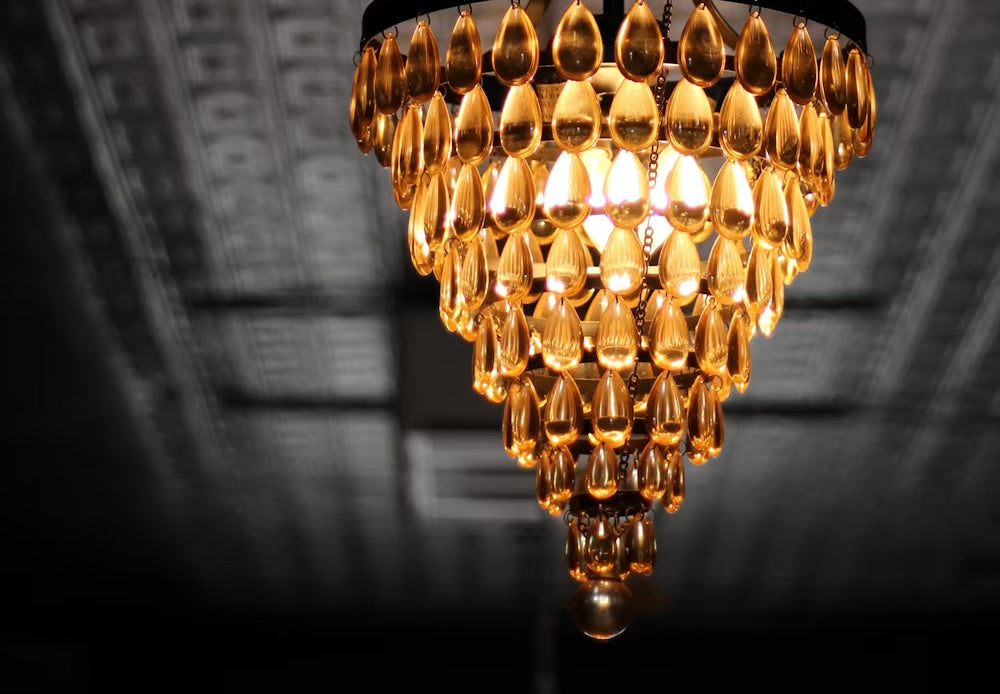
Historically associated with grand ballrooms and aristocratic mansions, a chandelier is a branched light fixture that holds multiple light sources. While traditional chandeliers featured dripping crystals and candle-like bulbs, modern chandeliers have evolved into sculptural masterpieces utilizing sleek metals, geometric rings, and integrated LED technology.
Chandeliers are designed to be the undisputed centerpiece of a room. They command attention and dictate the design language of the space they inhabit.
The Core Strengths of Chandeliers
-
Ambient Illumination: Unlike the downward, targeted light of a pendant, chandeliers typically cast light outward and upward, providing a soft, ambient glow that illuminates an entire room evenly.
-
Visual Weight and Drama: A chandelier serves as functional art. It anchors large spaces and provides a sense of scale and grandeur.
-
Single Installation: Instead of wiring multiple separate pendants, a chandelier delivers a massive impact from a single electrical box.
Best Spaces for Chandeliers
-
Dining Rooms: Centered over a large dining table, a chandelier anchors the space and creates an intimate, formal atmosphere for gathering.
-
Grand Foyers and Entryways: A double-height chandelier in a foyer immediately sets a luxurious tone for the rest of the home.
-
Living Rooms: In spaces with high ceilings, a chandelier bridges the gap between the furniture and the ceiling, ensuring the vertical space doesn't feel empty.
Spotlight on Ankur Lighting Chandeliers
3. ANKUR GEOM Infinity Loop Modern LED Pendant Chandelier
Blurring the line between art and illumination, this fixture is an avant-garde masterpiece. The seamless flow of the infinity loop creates an impression of endless movement. Finished in luxurious Gold or Rose Gold, this LED chandelier provides efficient, consistent 3000K warm lighting. It is an absolute showstopper for a modern dining room or a high-end corporate boardroom.
4. ANKUR GEOM Hexagon 3 Ring Contemporary LED Chandelier
For spaces that require significant volume without heavy visual clutter, this multi-tiered chandelier is the answer. Featuring three staggered hexagonal rings, it offers a sophisticated, contemporary aesthetic. Crafted from high-quality aluminum with a gold finish, it provides exceptional ambient light coverage. This is the ultimate statement piece for a grand staircase or a luxurious hotel lobby.

The Showdown: Key Differences at a Glance
To make the right choice, you need to evaluate how these fixtures differ across four critical dimensions:
1. Light Direction (Task vs. Ambient)
The most crucial functional difference lies in how the light behaves. Pendants generally act as task lighting. Their shades funnel light downward, making them perfect for illuminating specific surfaces (like a desk, counter, or reading nook). Chandeliers act as ambient lighting. Their multiple, exposed, or diffused light sources push light out in 360 degrees, raising the overall baseline brightness of the room.
2. Size, Scale, and Visual Weight
Chandeliers are inherently larger and heavier—both physically and visually. They take up significant horizontal and vertical space. Pendants are vertical and slender. Even when a pendant is large in diameter, its single-drop nature makes it feel lighter and less intrusive than a multi-branched chandelier.
3. Suspension and Installation
Pendants are almost always hung by a single cord or rod. If you want more light, you have to install multiple pendants, which requires precise measuring and spacing. Chandeliers are single units. While they may be suspended by heavy-duty chains or multiple stabilizing wires, they only require one ceiling junction box to deliver their massive impact.
4. Design Intent
A pendant is often used to complement a room's design. It is a stylish accessory. A chandelier is used to define a room's design. It is the architectural anchor around which the rest of the room is styled.

The Hybrid Approach: When Pendants Act Like Chandeliers
Modern lighting design is fluid, and the strict boundaries between pendants and chandeliers are blurring. Today, you can find "pendant chandeliers" or "cluster pendants" that offer the best of both worlds.
If you want the modern, streamlined look of a pendant but the functional scale of a chandelier, hybrid fixtures are the perfect middle ground.
5. ANKUR PENDULA 3CCT LED With Adjustable Lift Function Hanging Light
This fixture represents the evolution of the pendant. With a massive 4-foot length, it spans the size of a dining chandelier but maintains the sleek, single-bar profile of a linear pendant. What makes this fixture truly exceptional is its adjustable lift function and its 3CCT technology, allowing you to switch between warm, neutral, and cool white lighting depending on the time of day. Finished in brushed grey with a black canopy, it delivers 45W of powerful LED illumination, making it a highly functional centerpiece for long kitchen islands or extensive dining tables.
A Room-by-Room Guide to Making the Choice
Still on the fence? Here is a practical, room-by-room guide to help you decide.
The Kitchen
-
The Winner: Pendant Lights.
-
Why: Kitchens require high-quality task lighting. A row of two or three pendants over a kitchen island provides shadow-free illumination for food prep. Chandeliers in a kitchen can collect grease and dust on their intricate branches, making them a nightmare to clean.
The Dining Room
-
The Winner: Chandelier.
-
Why: The dining table is a natural gathering place that benefits from a centralized focal point. A chandelier anchors the table and provides an even, ambient glow that flatters the faces of your guests. Ensure the chandelier is sized correctly—it should be about 1/2 to 2/3 the width of your dining table.
The Bedroom
-
The Winner: It’s a Tie.
-
Why: It depends entirely on your ceiling height and layout. A subtle chandelier centered over the bed (flush or semi-flush if ceilings are standard height) adds a touch of romantic luxury. However, dropping two slender pendants over your nightstands is a highly modern, space-saving alternative to traditional table lamps.
The Foyer / Entryway
-
The Winner: Chandelier.
-
Why: You only get one chance to make a first impression. A foyer is typically a transitional space where you don't need task lighting. A large, sweeping chandelier draws the eye upward and immediately establishes the design pedigree of your home.

Lighting Temperatures Matter
Whether you choose a pendant or a chandelier, the fixture is only half the equation. The color temperature of the LED light you use fundamentally alters the mood.
-
Warm White (2700K - 3000K): Ideal for residential living rooms, bedrooms, and dining areas. It creates a cozy, inviting, and relaxing atmosphere. (Products like the Ankur Skysail and Geom Infinity Loop shine beautifully in 3000K).
-
Neutral White (4000K): Perfect for kitchens, bathrooms, and office spaces. It is energetic, clean, and accurately renders colors.
-
Cool White (5000K - 6500K): Best reserved for highly active workspaces, garages, or specific commercial retail displays where high visibility is paramount.
Final Verdict
The debate between pendant lights and chandeliers isn't about which fixture is inherently better; it is about which fixture is right for your specific spatial geometry and functional needs.
If your goal is to provide focused light for a specific task, maintain a minimalist aesthetic, or create a linear visual rhythm, Pendant Lights are your best tool.
If you want to make an uncompromising architectural statement, flood a room with ambient light, and create a centralized focal point, a Chandelier is the undisputed king.
Lighting is the jewelry of your home. Take the time to measure your space, consider your ceiling heights, and define the mood you want to create. Explore the complete collection of luxury, architectural, and commercial LED lighting at Ankur Lighting to find the perfect fixture to illuminate your vision.
Frequently Asked Questions (FAQs)
1. How high should I hang a chandelier over a dining table?
As a general rule, the bottom of the chandelier should hang approximately 30 to 36 inches above the surface of your dining table. If your ceilings are higher than 8 feet, you can add 3 inches of height for every additional foot of ceiling space to maintain proper visual proportions.
2. Can I use pendant lights instead of a chandelier in a dining room?
Yes. While chandeliers are traditional, a cluster of pendants hung at varying heights, or a large linear pendant (like the Ankur Pendula), can look incredibly chic and modern over a dining table.
3. Are modern LED chandeliers bright enough to light an entire room?
Absolutely. Modern LED chandeliers are highly efficient and produce a significant amount of lumens. Unlike old incandescent bulbs, high-quality LEDs (like those used in the Ankur Geom collection) provide bright, consistent, and energy-efficient ambient lighting capable of illuminating large spaces.
4. How do I determine the right size chandelier for my room?
A quick interior design formula: measure the length and width of your room in feet. Add those two numbers together. That sum, in inches, is the approximate diameter your chandelier should be. For example, a 10x14 foot room (10+14=24) would suit a chandelier roughly 24 inches in diameter.
5. What is the difference between a linear pendant and an island chandelier?
The terms are often used interchangeably in modern design. A linear pendant is typically a single, continuous bar of light. An island chandelier usually features a linear frame but holds multiple distinct light sources (like several glass globes attached to one bar). Both are designed to provide wide, even lighting over rectangular surfaces like kitchen islands or long dining tables.
Read more
Modern Lighting Trends for Indian Homes in 2026
Lighting is no longer just a functional afterthought in Indian interior design—it has evolved into the defining element that dictates the mood, spatial perception, and aesthetic appeal of a home. A...
Read more
Luxury Lighting Buying Guide for New Homeowners
Moving into a new home is one of the most exciting milestones in life—it is a blank canvas waiting for your personal touch. While most new homeowners immediately focus on selecting the perfect pain...
Read more